

A tiny drip doesn’t seem like a big deal: until you get your monthly water bill. Water leaks are the silent bank account killers of the homeownership world. According to the EPA, the average household's leaks can account for nearly 10,000 gallons of water wasted every year. That is enough to wash 270 loads of laundry!
Finding a leak early is the difference between a simple $150 repair and a $5,000 disaster involving mold remediation and structural repairs. At Infinity Plumbing, we see it all the time: a homeowner notices a small damp spot, ignores it for a month, and suddenly they need pipe repair specialists to tear out a wall.
In this guide, we’re going to show you exactly how to hunt down these sneaky leaks yourself using simple tools you already have at home.
The "Gold Standard" DIY Leak Test: Your Water Meter
Before you start tearing your hair out looking at every pipe in the house, there is one foolproof way to tell if you even have a leak in the first place. You need to check your water meter.
How to Perform the Meter Test
- Turn off everything: Make sure no water is being used inside or outside your home. This means no laundry, no dishwashers, no showers, and definitely no irrigation systems.
- Find your meter: For most homeowners, the meter is located in a box near the street or sidewalk. In some climates, it might be in your basement or utility room.
- Watch the "Leak Indicator": Most modern meters have a small triangular dial or a silver rotating wheel called a leak indicator. If that little triangle is spinning even slightly while all your water is off, you have a leak.
- The Wait-and-See Method: If your meter doesn't have a visible leak indicator, write down the current meter reading. Leave the water off for at least 30 to 60 minutes. Check it again. If the numbers have moved, water is escaping somewhere.

If you find that your meter is moving, you now know for a fact that there is a problem. The next step is figuring out where that water is going. You can learn more about how our residential plumbing services can help you narrow this down quickly.
Look for the "Red Flags" Around Your Home
Sometimes the signs of a leak aren't on the meter; they are right in front of your eyes (or nose). If you notice any of the following, you need to act fast.
1. The Mysterious Water Bill Spike
If your habits haven't changed: you haven't filled a pool or had guests staying over: but your bill has jumped 20% or 30%, that’s a leak. This is often the first "clue" homeowners get.
2. Wall Stains and Bubbling Paint
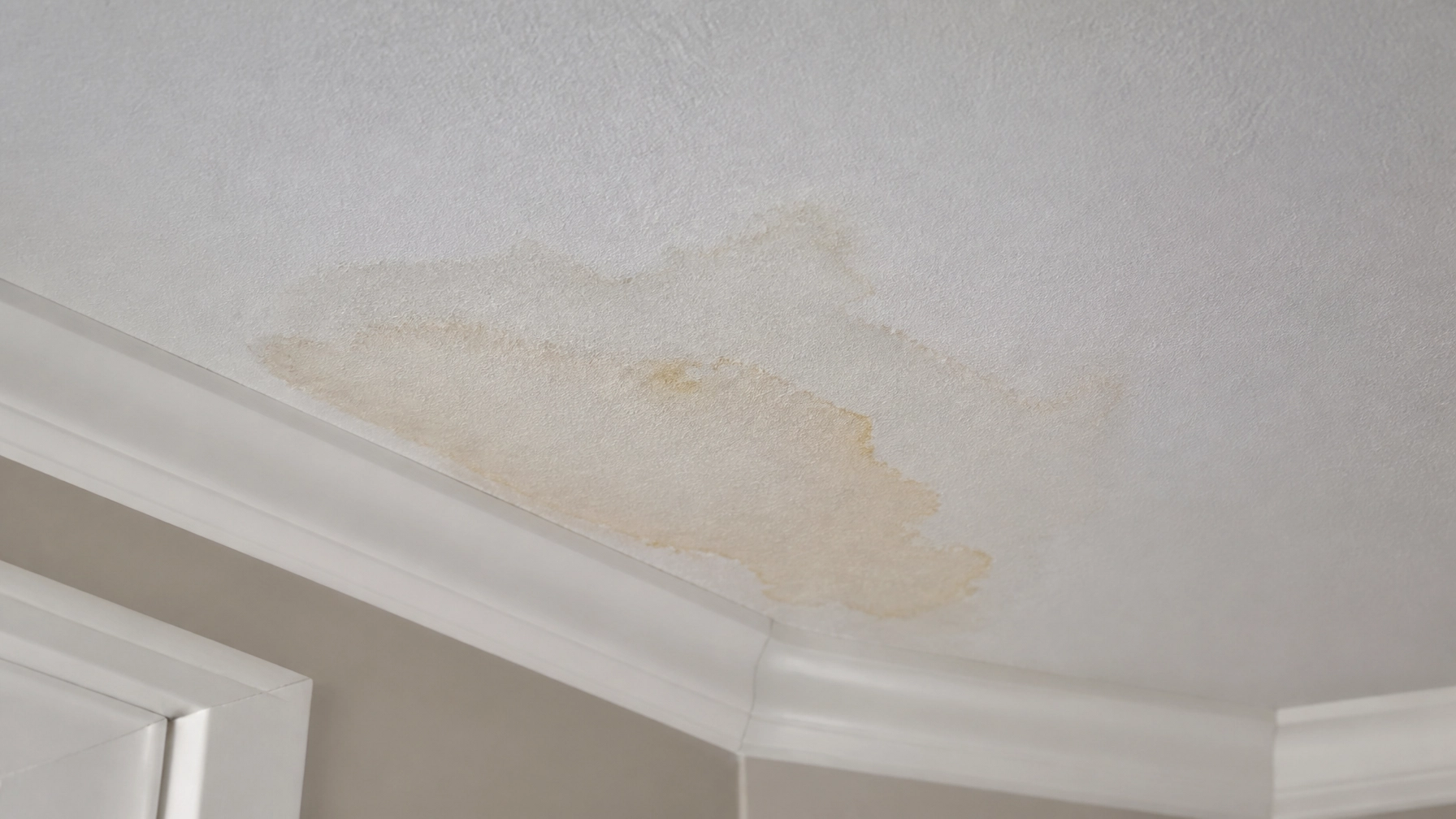
Water follows the path of least resistance. Often, a pipe leaking inside a wall will cause the drywall to soften. Look for:
- Yellowish or brownish stains on the ceiling.
- Paint that looks like it is "bubbling" or peeling away.
- Wallpaper that is warping.
3. That "Musty" Smell
If your bathroom or kitchen cabinet smells like a damp basement, even after you’ve cleaned it, there is likely moisture trapped somewhere. Mold and mildew thrive in the dark, damp spaces created by pinhole leaks in your pipes.
4. The Sound of Running Water
When the house is quiet at night, listen closely. Do you hear a faint hissing or the sound of water rushing through pipes, even though no one is using the bathroom? This is a classic sign of a "slab leak" or a leak behind a wall.
Common Culprits: Where to Check First
Most household leaks happen in just a few predictable places. Before you search "leak detection near me," check these three areas.
The Toilet (The Sneakiest Leaker)
Toilets can leak hundreds of gallons a day without making a sound. The most common cause is a worn-out flapper: the rubber valve at the bottom of the tank.
- The Dye Test: Drop a few drops of food coloring into the toilet tank. Don't flush. Wait 20 minutes. If the water in the bowl changes color, your flapper is leaking. This is a cheap and easy fix!
Under the Sink
It sounds obvious, but many people don't look under their sinks until they pull out a soaking wet bottle of dish soap.
- The Paper Towel Test: Take a dry paper towel and run it along the "P-trap" (the U-shaped pipe) and the shut-off valves. If the towel comes back damp, you’ve found your culprit.

Appliances
Check the hoses behind your washing machine and refrigerator (if it has an ice maker). These rubber hoses can become brittle over time and crack, leading to slow, steady leaks that ruin your flooring.
Don't Forget the Outside
Not all leaks happen inside the four walls of your house. If your meter is running but you can’t find a single damp spot inside, the problem might be in your yard.
- Greener Grass: Is one patch of your lawn significantly greener or taller than the rest? It might be getting "extra" water from a buried pipe leak.
- Soggy Spots: If it hasn't rained in a week but you have a muddy "soft spot" in your yard, that is a major red flag for a broken main line.
- Foundation Cracks: Water leaking under your home’s foundation (a slab leak) can eventually cause the concrete to crack or the soil to shift.
When to Call the Professionals
While DIY checks are great for catching "surface" leaks, some problems are buried deep underground or hidden behind layers of tile and brick. This is where Infinity Plumbing comes in.
Trying to find a leak by tearing open every wall in your house is expensive and messy. As pipe repair specialists, we use high-tech tools to find leaks without the destruction:
- Acoustic Leak Detection: We use sensitive microphones to "listen" through concrete and walls to find the exact vibration of a leak.
- Thermal Imaging: Infrared cameras allow us to see temperature differences in your walls, highlighting the cold spots where water is accumulating.
- Borescope Cameras: We can feed tiny cameras into your drain lines to see exactly where a pipe has failed.

If you find yourself in a situation where water is gushing or you can't shut off the main valve, you don't have time to wait. You need an emergency plumber near me who can get there fast to prevent further damage.
Conclusion: Catch it Early, Save Big
Finding a water leak doesn't have to be a nightmare. By performing a simple meter test once a season and keeping an eye out for wall stains or weird smells, you can protect your home and your wallet.
At Infinity Plumbing, we are dedicated to providing the most reliable residential plumbing services in the area. Whether you need a simple faucet fix or a full-scale leak detection overhaul, our team is here to help.

Contact Us Today
Don't wait for a drip to become a flood. If you suspect a leak, contact the pros at Infinity Plumbing.
- Website: infinityhome.services
- Phone: 239-499-8998
- Email: service@infinityhome.services
We serve homeowners with pride, ensuring your plumbing stays "infinity" levels of reliable.
Leave a Reply