

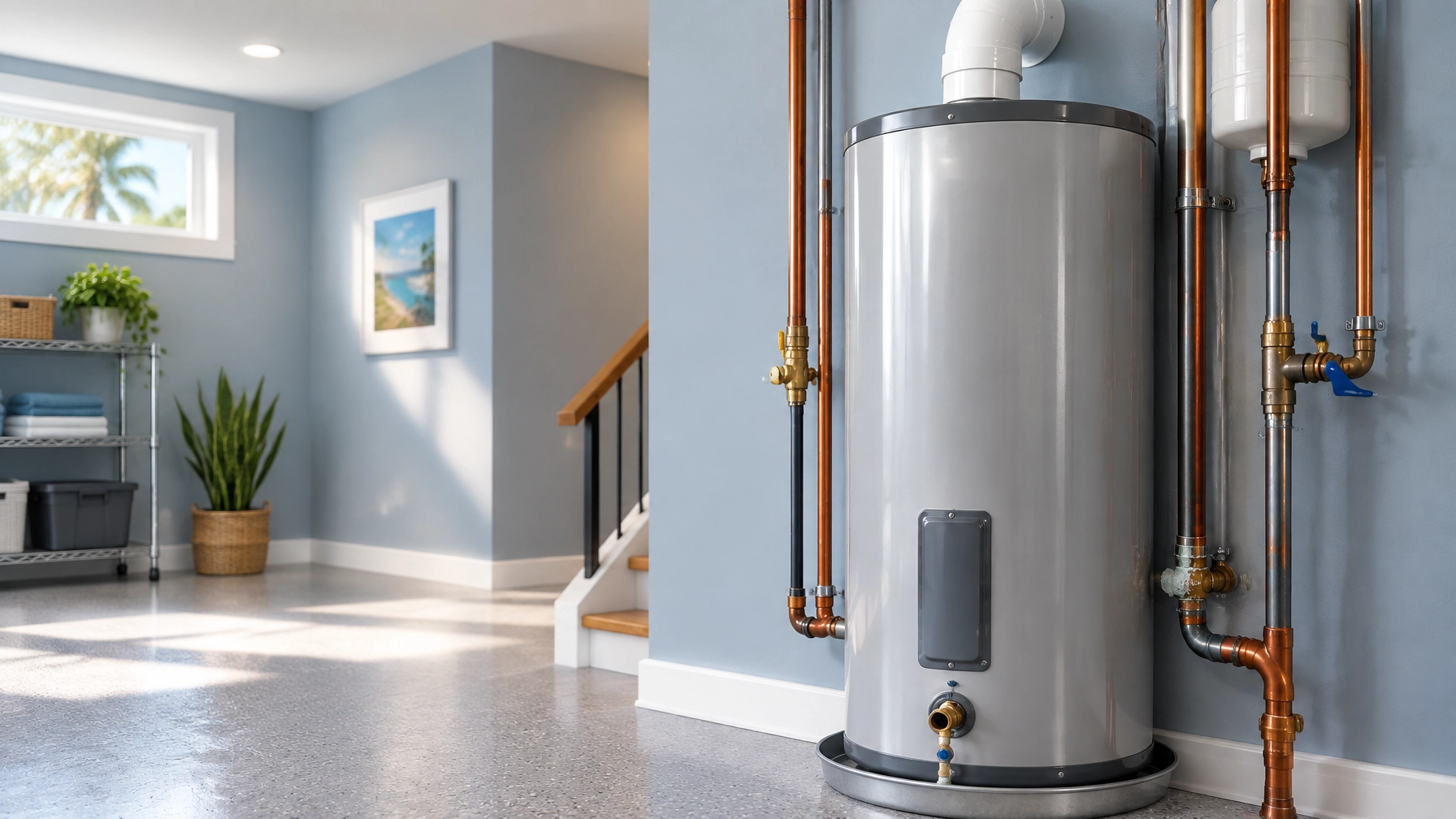
Most traditional water heaters last around 8 to 12 years. With proper care, some can last longer, but hard water, heavy household use, and skipped maintenance can shorten that timeline.
For Cape Coral homeowners, knowing your water heater’s age and watching for early warning signs can help you avoid a sudden leak, cold showers, or an emergency replacement. Here’s what to look for and when to call a professional for water heater repair or replacement.
How long do water heaters usually last?
The lifespan depends on the type of water heater in your home:
- Traditional gas water heaters: About 8 to 12 years
- Traditional electric water heaters: About 10 to 15 years
- Tankless water heaters: About 15 to 20 years with regular maintenance
- Heat pump water heaters: Often 10 to 15 years
These are general ranges, not guarantees. A water heater that serves a large household may wear out sooner than one in a smaller home. Water quality also matters.
Cape Coral homes can experience mineral-heavy water, which may lead to scale and sediment buildup inside the tank or around heating components. That buildup makes the unit work harder and can reduce its useful life.
If your tank-style water heater is around 10 years old, it is smart to begin planning for replacement: even if it is still working today.

7 signs you may need water heater repair or replacement
1. You see water around the tank
Water pooling near the bottom of the water heater should never be ignored. First, check whether the water is coming from a loose fitting, drain valve, or connection. Those issues may be repairable.
If the water is leaking from the tank itself, the inner lining may be corroded or cracked. A tank leak usually means the unit needs to be replaced rather than repaired.
Even a small leak can become a major one without warning. Water heaters hold a large amount of water, so a failed tank can damage flooring, walls, storage areas, and nearby equipment.
If the leak is active, shut off the water supply to the unit if it is safe to do so and contact a plumber.
2. Your hot water is rusty or discolored
Hot water that looks brown, orange, or rusty can point to corrosion inside the tank or a deteriorating anode rod. A small amount of discoloration may also come from older plumbing, but it should still be checked.
If only the hot water is discolored while cold water looks normal, the water heater is a likely source. Internal corrosion can eventually lead to leaks and poor water quality.
A plumber can inspect the tank, check the anode rod, and determine whether a repair can solve the problem or whether replacement makes more sense.
3. The water heater makes popping or rumbling sounds
Popping, crackling, banging, or rumbling noises often come from sediment collecting at the bottom of a tank-style water heater.
When the burner or heating element warms the water beneath the sediment, trapped pockets of water can bubble and burst. This creates the sounds you hear and forces the heater to work harder.
Some sediment can be removed through professional flushing. However, if the buildup has hardened or the unit is already old, flushing may not restore normal performance. Persistent noise is a good reason to schedule an inspection.

4. You are running out of hot water faster than before
A water heater that used to provide plenty of hot water but now runs out quickly may have a failing heating element, thermostat, burner, or heat exchanger.
It can also be a sign that sediment is taking up space inside the tank. Less usable tank capacity means less hot water for showers, laundry, and dishes.
Before replacing the unit, a plumber can check whether a component repair will restore performance. If the heater is older and several parts are wearing out, replacement may be the better long-term choice.
5. The water temperature keeps changing
Does the water suddenly turn cold during a shower? Does it become too hot and then cool down again? Inconsistent temperature can indicate a problem with the thermostat, heating elements, burner, temperature sensor, or internal scale buildup.
For tankless systems, temperature changes may also be related to mineral buildup, low flow, an undersized unit, or recurring error codes.
Do not keep adjusting the temperature to compensate for a malfunctioning water heater. Water that is too hot can cause burns, especially for children and older adults. Professional testing can identify the cause safely.
6. Your energy bills are rising
A sudden increase in your gas or electric bill may have several causes, but an aging water heater is one possibility.
Sediment buildup creates an insulating layer around the heating area. The unit may need to run longer to heat the same amount of water, using more energy in the process.
A failing thermostat, burner, heating element, or tankless heat exchanger can also reduce efficiency. If your usage has not changed but your water-heating costs have increased, ask a plumber to inspect the system.
7. The water heater is old and needs frequent repairs
Age alone does not mean a water heater must be replaced immediately. However, age combined with repeated problems is a strong warning sign.
Replacement is often worth considering when:
- A tank-style unit is 10 years old or more
- A tankless unit is approaching 15 to 20 years
- The same problem keeps returning
- Multiple components are failing
- The repair cost is close to half the price of a new unit
- The tank shows rust or corrosion
- Your household regularly runs out of hot water
A newer unit may also provide better efficiency, more reliable temperature control, and a new manufacturer warranty.
When is water heater repair the better choice?
Repair may make sense when the water heater is relatively young and the tank itself is in good condition.
Common repairable problems include:
- A failed heating element
- A defective thermostat
- A worn drain valve
- A faulty temperature and pressure relief valve
- A damaged anode rod
- A loose water connection
- A burner or ignition issue
If there is no tank leak or serious corrosion, a targeted repair may extend the system’s life for several more years. A professional inspection can help you compare the immediate repair cost with the likely cost of future service.
When should you plan hot water heater replacement?
Replacement is usually the safer choice when the tank is leaking, heavily corroded, or near the end of its expected lifespan.
Planned replacement is better than waiting for a complete failure because you have time to:
- Choose the right tank size
- Compare standard and tankless options
- Improve efficiency
- Schedule work at a convenient time
- Prepare the installation area
- Avoid going without hot water
If you are replacing an older unit, ask about water quality and maintenance needs. A water softener or whole-home filtration system may help reduce scale and protect the new heater.
How to extend your water heater’s life in Cape Coral
A few simple maintenance steps can help your system last longer:
- Check the unit for leaks and rust several times a year.
- Have a tank-style heater flushed regularly to remove sediment.
- Ask about the anode rod, which helps protect the tank from corrosion.
- Schedule tankless descaling when recommended for your water conditions.
- Keep the area around the heater clear so leaks are easier to spot.
- Have water pressure checked if you notice leaking valves or recurring plumbing problems.
- Write down the installation date so you know when replacement planning should begin.
For more help with household plumbing maintenance, visit Infinity Plumbing’s residential plumbing services.
Need an emergency plumber near me in Cape Coral?
A leaking water heater can quickly turn into water damage. If you smell gas, see active leaking, hear unusual noises, or have no hot water, do not wait for the problem to get worse.
Infinity Plumbing provides residential plumbing services for water heater problems, leaks, inspections, repairs, and replacements in Cape Coral. If you need a 24 hour plumber or an emergency plumber near me, call 239-499-8998 or email service@infinityhome.services.
You can also contact Infinity Plumbing to schedule an inspection and find out whether water heater repair or replacement is the right next step for your home.
Leave a Reply