

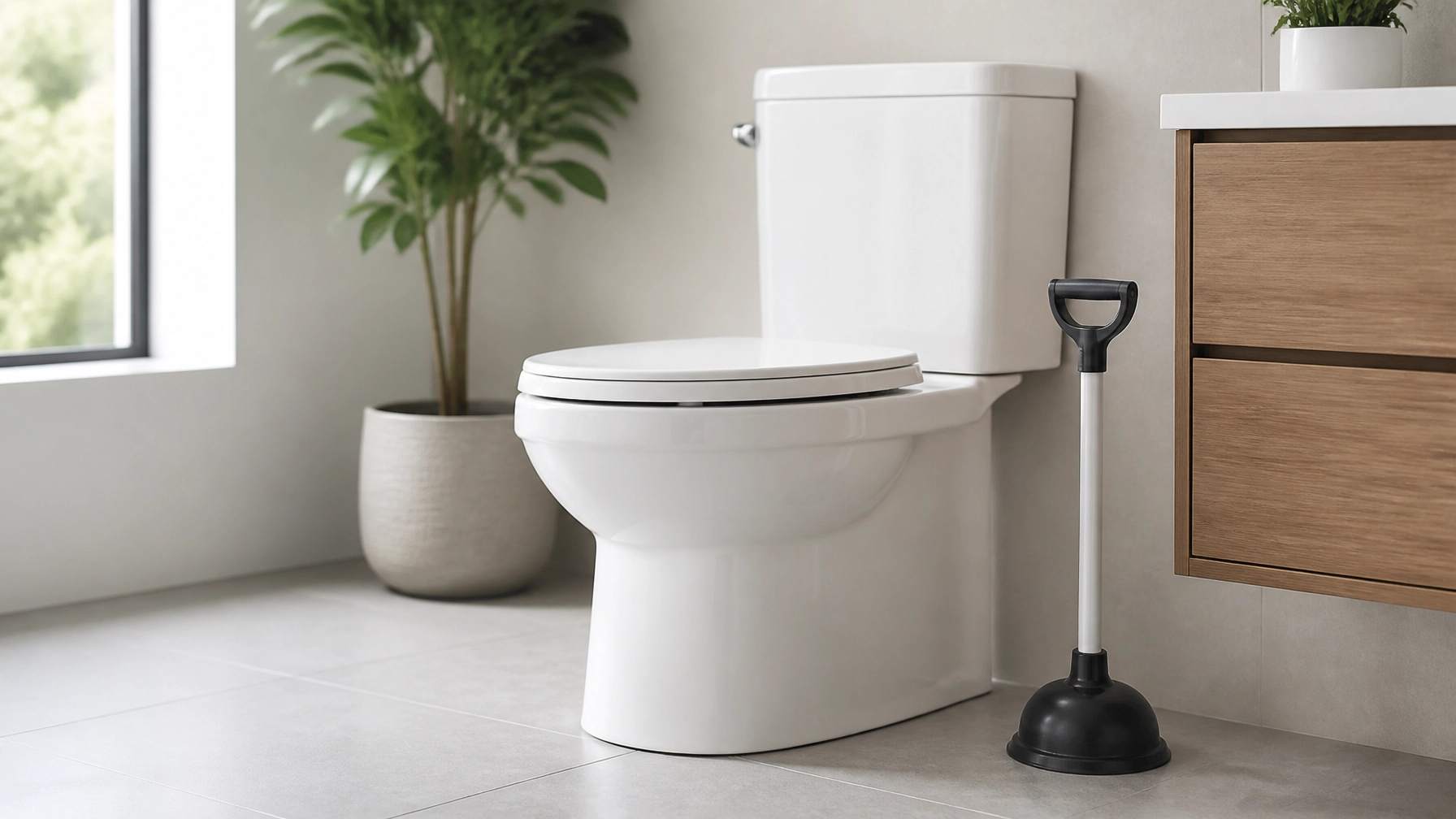
Few household emergencies cause instant panic quite like flushing a toilet and watching the water level steadily rise toward the rim instead of swirling away. Your heart races, you frantically grab for the handle hoping for a miracle, and you wonder if you're about to face a messy bathroom flood.
Take a deep breath! Before you reach for your phone to call for emergency plumbing help, you can tackle most common toilet clogs yourself with a few simple tools and techniques. Whether it’s too much toilet paper, an unfortunate toy, or a stubborn blockage, this step-by-step guide will walk you through clearing the clog safely, choosing the right plunger, using kitchen pantry staples like dish soap, and knowing exactly when it's time to bring in the experts at Infinity Plumbing.
Step 1: Prep the Area and Stop an Overflow
Before you do anything else, take a moment to prep your workspace. A little preparation now will save you from major cleanup headaches later.
- Lay down protection: Spread old towels or newspapers around the base of the toilet.
- Suit up: Put on a pair of rubber cleaning gloves.
- Prevent an overflow: If the water in the bowl is rising dangerously close to the rim, you need to stop more water from entering the tank immediately. Reach behind the base of the toilet and turn the water supply valve clockwise until it stops. Alternatively, lift the tank lid and prop up the float ball or cup so the fill valve stops running.
If the bowl is overly full, use a disposable cup or small container to bail out excess water into a bucket until the bowl is about half full. You need enough water for the plunger to create suction, but not so much that it spills over when you start working.

Step 2: The Hot Water & Dish Soap Method
If you want to soften a clog before bringing out the heavy-duty plunger, your kitchen pantry holds a secret weapon: liquid dish soap and warm water. This method works wonders for soft clogs made of toilet paper and organic waste.
- Squirt the soap: Pour about ¼ to ½ cup of liquid dish soap directly into the toilet bowl. Let it sink down into the trapway.
- Add warm water: Heat up a gallon of water on your stove or use hot tap water. Important: Never use boiling water! Extreme heat can crack your porcelain toilet bowl, turning a minor clog into a costly fixture replacement. The water should be hot to the touch: similar to a hot bath.
- Pour from height: Carefully pour the warm water into the bowl from waist height. The added force and height help push the soapy water down into the clog.
- Let it sit: Give the mixture 10 to 15 minutes to work its magic. The dish soap lubricates the pipe and breaks down grease and paper, allowing the blockage to slide free.
After 15 minutes, check the water level. If it has dropped, try a gentle flush. If the water is still sitting there, it’s time to move on to the plunger.
Step 3: Flange Plunger vs. Cup Plunger (Know Your Tools)
Not all plungers are created equal! Using the wrong tool is the number one reason homeowners fail to clear a clogged toilet.
- The Cup Plunger (Sink Plunger): This is the classic flat-bottomed rubber cup with a wooden handle. While great for flat surfaces like kitchen sinks and bathtubs, it cannot form a proper airtight seal over the curved, uneven drain opening at the bottom of a toilet bowl. If you use a cup plunger on a toilet, you'll mostly just splash water around.
- The Flange Plunger (Toilet Plunger): This plunger features an additional soft rubber flap (the flange) extending outward from the main cup. When unfolded, this flap creates a custom, airtight seal inside the toilet drain opening, focusing all your pushing power directly into the blockage.
Always use a flange plunger for toilets! Run it under warm tap water for a minute before using it; this softens the rubber so it forms a tighter seal against the porcelain.

Step 4: The Proper Plunging Technique
Having the right tool is only half the battle. Proper technique ensures you generate enough suction and pressure to dislodge the clog without splashing water across your bathroom floor.
- Insert at an angle: Lower the plunger into the bowl at an angle so the flange fills with water rather than trapping a pocket of air.
- Form a secure seal: Position the flange directly inside the drain opening at the bottom of the bowl and press down firmly to create an airtight seal.
- Start gently: Begin with two or three slow, gentle plunges. This settles the rubber seal and pushes out any trapped air without causing a splash.
- Vigorous up-and-down strokes: Once sealed, pump the handle up and down rapidly and firmly, keeping the plunger vertical. Maintain contact with the drain and keep the rubber cup fully submerged in water. Plunge continuously for 15 to 20 seconds.
- Break the seal and check: Snap the plunger upward to break the seal and watch the water level. If it drains rapidly, success! Flush once with clean water to confirm the drain is completely clear. If it drains slowly or not at all, reposition the plunger and repeat the process for another round.

Step 5: What NOT to Flush (The Never-Flush List)
Many stubborn clogs happen simply because items that don't belong in a toilet system were flushed down the drain. To protect your home's plumbing, remember that toilets are engineered to handle only human waste and toilet paper.
Never flush the following items, no matter what the packaging claims:
- Flushable wipes: Even brands labeled "flushable" do not break down like toilet paper and frequently catch on pipe lips, forming massive clogs.
- Paper towels, facial tissues, and napkins: These materials are designed to stay strong when wet and do not dissolve easily in plumbing lines.
- Cotton balls, Q-tips, and dental floss: Floss wraps around pipe debris like a net, while cotton products expand and absorb water, blocking flow.
- Feminine hygiene products: These expand significantly in water and are a primary cause of severe main sewer line blockages.
- Hair, grease, and food scraps: Always dispose of kitchen grease and food in the trash, not down the bathroom or kitchen sink and certainly not the toilet.
Step 6: Stubborn Clogs and Removing the Toilet
If you’ve tried dish soap, hot water, and rigorous plunging with a flange plunger and the toilet still won't budge, the blockage may be a hard object (like a child's toy, a shampoo cap, or a toothbrush) lodged deep in the trapway.
At this stage, some advanced DIYers attempt to use a toilet auger (plumber’s snake), which feeds a flexible metal cable down the drain to hook or break apart the obstruction. However, if an auger doesn't work, or if you suspect the clog is further down in your main sewer line, removing the toilet from the floor may be necessary to access the trap from underneath.
Removing a toilet involves shutting off the water supply, disconnecting the supply line, unbolting the toilet from the floor flange, and lifting it off: a messy and physically demanding job that risks cracking the porcelain or damaging the wax ring seal.

Step 7: When It’s Time to Call a Professional Plumber
While DIY methods save money on everyday clogs, there are times when wrestling with a toilet is no longer worth the frustration or potential water damage. Call Infinity Plumbing immediately if you notice any of the following warning signs:
- Multiple clogged fixtures: If your toilet, bathtub, and sinks are all backing up simultaneously, you are dealing with a main sewer line blockage rather than a simple toilet clog.
- Frequent recurring clogs: If your toilet clogs regularly even with normal use, it points to a deeper venting issue, pipe corrosion, or root intrusion in your sewer line.
- Sewage odors or backups: Standing water or raw sewage coming up through your shower drain or floor drains is a health hazard requiring professional hydro-jetting or camera inspection.
- Cracked porcelain: If your toilet bowl or tank has developed cracks during the unclogging process, stop using it immediately and call a professional for a safe replacement.
Get in Touch with Infinity Plumbing
Don't let a stubborn plumbing issue disrupt your day. Reach out to our expert team for fast, reliable service throughout our service area:
- Phone: 239-499-8998
- Email: service@infinityhome.services
- Website: infinityhome.services
Frequently Asked Questions
Can I use chemical drain cleaners in a clogged toilet?
We strongly advise against using harsh chemical drain cleaners in toilets. These chemicals can generate excessive heat, potentially cracking your toilet bowl, and they rarely dissolve dense toilet paper or foreign object clogs. If they fail, they leave standing chemical water in the bowl, making it dangerous for a plumber to work on.
Why does my toilet keep clogging for no apparent reason?
If your toilet clogs frequently without excessive paper use, you may have a partial blockage further down the drain line, a venting problem, or mineral scale buildup inside the trapway restricting flow. A professional camera inspection can pinpoint the exact cause.
How much water should be in the toilet bowl normally?
A standard toilet bowl water level sits about 2 to 3 inches below the top of the drain opening, roughly filling the curved bottom trap. If your water level is consistently too low, you may have a fill valve or flapper issue; if it's too high, you have a partial slow clog.
Leave a Reply