

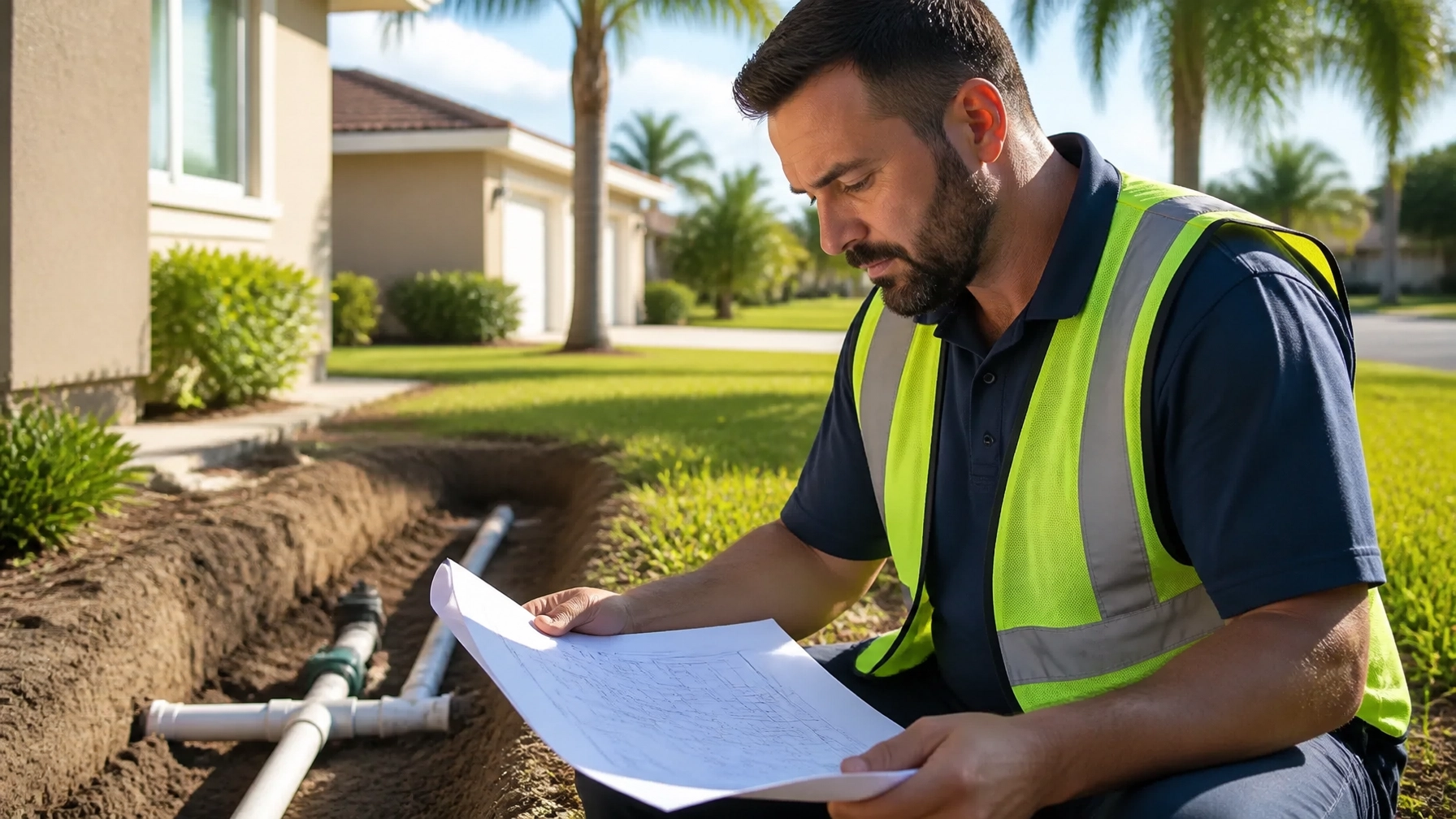
If you live in a Cape Coral neighborhood affected by the Utility Expansion Project, your home may be making a major change: moving from a private well and septic system to City water and sewer.
That change can improve reliability and make future home maintenance easier. But the connection process includes deadlines, permits, inspections, and utility rules that are easy to overlook. Many homeowners do not run into trouble because they are careless. They run into trouble because they assume the process starts when construction ends or that someone else is handling the details.
The most important thing to remember is that your Notice of Availability starts the process. Developed properties generally must connect to the new water and sewer services within a 180-day deadline from the date stated in the notice.
Here are six common Cape Coral utility expansion mistakes and practical ways to avoid them.
Mistake 1: Waiting Until the Last Minute
The 180-day clock starts on the date shown in your Notice of Availability (NOA). It does not start when you first notice construction crews in the neighborhood, and it does not restart when the utility construction is finished.
At first, 180 days may sound like plenty of time. However, your project may require:
- Choosing a licensed plumber
- Reviewing the connection requirements
- Applying for permits
- Scheduling excavation and plumbing work
- Pumping and abandoning the septic tank
- Completing pressure tests or chlorination
- Scheduling City and Health Department inspections
- Correcting any failed inspection items
- Restoring the yard or driveway
Plumbers’ schedules can fill quickly when multiple homes receive NOAs around the same time. If you wait until the final few weeks, you may have difficulty finding an available contractor or leaving enough time to fix unexpected problems.
How to avoid it
As soon as your NOA arrives, write down the effective date and calculate your 180-day deadline. Then contact a licensed plumber in Cape Coral early for an evaluation and written estimate.
Starting early does not necessarily mean the work must happen immediately. It gives you time to understand the scope, budget properly, and schedule the work without rushing.
For additional planning help, review our guide to Cape Coral plumbing permits.
Mistake 2: Not Reading the NOA Carefully
Some homeowners see the City envelope and set it aside. Others read the letter but miss the details that affect their property.
The NOA may identify the date when services became available and explain which utilities you are required to connect to. Depending on your UEP project area, that may include:
- City potable water
- City wastewater service
- City irrigation service
Water and sewer connections are generally required for developed properties located next to the new utilities. Irrigation requirements can vary by project area, so it is important not to assume that every property has the exact same obligations.
Ignoring the NOA can lead to missed deadlines, possible fines, delayed service, or confusion about when your existing well and septic system can no longer be used.
How to avoid it
Read the entire notice and highlight:
- The effective date
- The 180-day connection deadline
- The required utility services
- The application and payment instructions
- Any contact information for questions
Keep a copy with your property records and provide it to your plumber. If something is unclear, confirm the details with the City of Cape Coral before work begins. City requirements can vary depending on the specific UEP area.
Mistake 3: Skipping the Septic Abandonment Process
Connecting your home to City sewer does not automatically take care of your old septic tank.
Once your home is connected to City wastewater, the septic system is no longer needed. The tank must be properly abandoned under the applicable requirements. That generally includes pumping the tank and then collapsing, filling, or otherwise abandoning it using an approved process.
A septic abandonment permit is required, and the Lee County Health Department must complete the required inspection. Leaving the tank in place without completing this process can create future problems, including unsafe conditions, standing water, settlement, or issues when you sell the property.

Some homeowners assume the City or the utility contractor will handle the septic tank because the new sewer line is in the street. Usually, the private-property connection and septic abandonment are the homeowner’s responsibility.
How to avoid it
Ask your plumber to explain the complete septic abandonment process before the work is scheduled. Confirm that the estimate includes:
- Septic tank pump-out
- The abandonment work itself
- The septic abandonment permit
- Required forms
- Lee County Health Department inspection coordination
- Proper documentation after completion
Do not assume that pumping alone is enough. A pumped tank that has not been properly abandoned may still fail to meet the requirements.
Mistake 4: Budgeting Only for City Fees
The City’s connection-related fees are only one part of the project cost.
Current guidance commonly lists approximate fees such as:
- About $325 for a typical residential water meter installation
- About $225 for a residential utility account deposit, depending on the credit check
- About $100 for the septic abandonment permit
These amounts may change, so confirm the current fees with the City of Cape Coral before paying.
Homeowners must also budget for the private plumbing work. Depending on the property, the cost may include:
- Excavation and trenching
- Water service piping
- Sewer lateral piping
- Irrigation piping, if required or selected
- Fittings, valves, and connection materials
- Testing and documentation
- Septic pumping and abandonment labor
- Permit processing
- Backfilling and basic restoration
- Repairs to landscaping, pavers, or areas outside the City’s restoration responsibility
The location of your home, the distance to the connection point, existing pipe conditions, access, and landscaping can all affect the final price.
How to avoid it
Request a detailed estimate rather than a single total. Ask which costs are paid directly to the City and which are included in the plumber’s work.
Also ask whether the estimate includes septic abandonment, testing, inspection coordination, and restoration. A clear scope helps prevent surprises later.
Some income-qualified homeowners may be eligible for assistance programs, so it may also be worth asking the City about current connection assistance options.
Mistake 5: Ignoring Well and Irrigation Rules
Many Cape Coral homes have existing wells, irrigation systems, or both. Connecting to City water does not always mean every well component must be removed, but it does mean you must follow the rules for your UEP project area.
Existing wells may remain on the property. However, homeowners may or may not be allowed to continue using a private well for irrigation, depending on the project requirements.
One rule is especially important: there must be no cross-connection between potable City water and a well or other non-potable water source. A well line cannot be tied into the home’s drinking-water plumbing or connected to City potable lines.
If reclaimed water irrigation is involved, the system may require clearly identified piping, including purple pipe or proper labeling. Irrigation water must remain separate from potable water to protect your household water supply.

How to avoid it
Before the plumber starts, explain all existing water sources and irrigation equipment on your property. Ask for a review of:
- Private well piping
- Irrigation valves
- Backflow prevention
- Existing hose connections
- Indoor plumbing connections
- Reclaimed water lines
- Any abandoned or unused piping
Never connect systems based on appearance alone. A line that looks like an irrigation pipe may be connected differently than expected. A licensed plumber can identify potential cross-connections and make the necessary corrections before inspection.
Mistake 6: Backfilling Before Inspections
It is tempting to fill in a trench as soon as the new pipes are installed. Leaving your yard open feels inconvenient, especially before rain or when you need access to your driveway.
But the trench usually needs to remain open until the required inspections are complete. City inspectors need to see the water, sewer, and (where applicable) irrigation connections. The Health Department also needs to inspect the septic abandonment work.
If you backfill too soon and an inspection fails, part or all of the trench may need to be excavated again. That can mean additional labor, more disruption, and a longer project.
How to avoid it
Confirm with your plumber which inspections are required and when they have passed. Keep the trench open until the City and Health Department requirements are satisfied.
Your plumber may also need to submit documents such as:
- Affidavit of chlorination
- Potable water test results
- Gravity sewer test results
- Septic abandonment paperwork
- Other project-specific forms
Only after the required inspections pass should the trench be backfilled and the area restored.

Cape Coral Utility Expansion Connection Checklist
Use this quick recap when planning your connection:
- Find the effective date on your NOA.
- Calculate the 180-day deadline.
- Confirm which services are required for your UEP area.
- Hire a licensed plumber early.
- Get a detailed estimate for City fees and private plumbing costs.
- Apply for the required connection and septic abandonment permits.
- Schedule the septic pump-out and abandonment inspection.
- Review well, irrigation, and cross-connection requirements.
- Leave trenches open until all inspections pass.
- Keep copies of permits, test results, and inspection approvals.
Need Help With Your UEP Connection?
The Cape Coral utility expansion process does not have to be confusing. A qualified plumbing professional can help you understand the work required, coordinate permits, prepare the connection, and avoid common inspection problems.
Infinity Plumbing helps homeowners with residential plumbing projects, including water and sewer connections, trenching, testing, and septic abandonment. Visit our plumbing services page to learn more or contact Infinity Plumbing to discuss your project.
Phone: 239-499-8998
Email: service@infinityhome.services
Website: infinityhome.services
City rules, fees, and deadlines may change. Always confirm the current requirements and your property’s specific connection obligations with the City of Cape Coral before beginning work.
Leave a Reply