

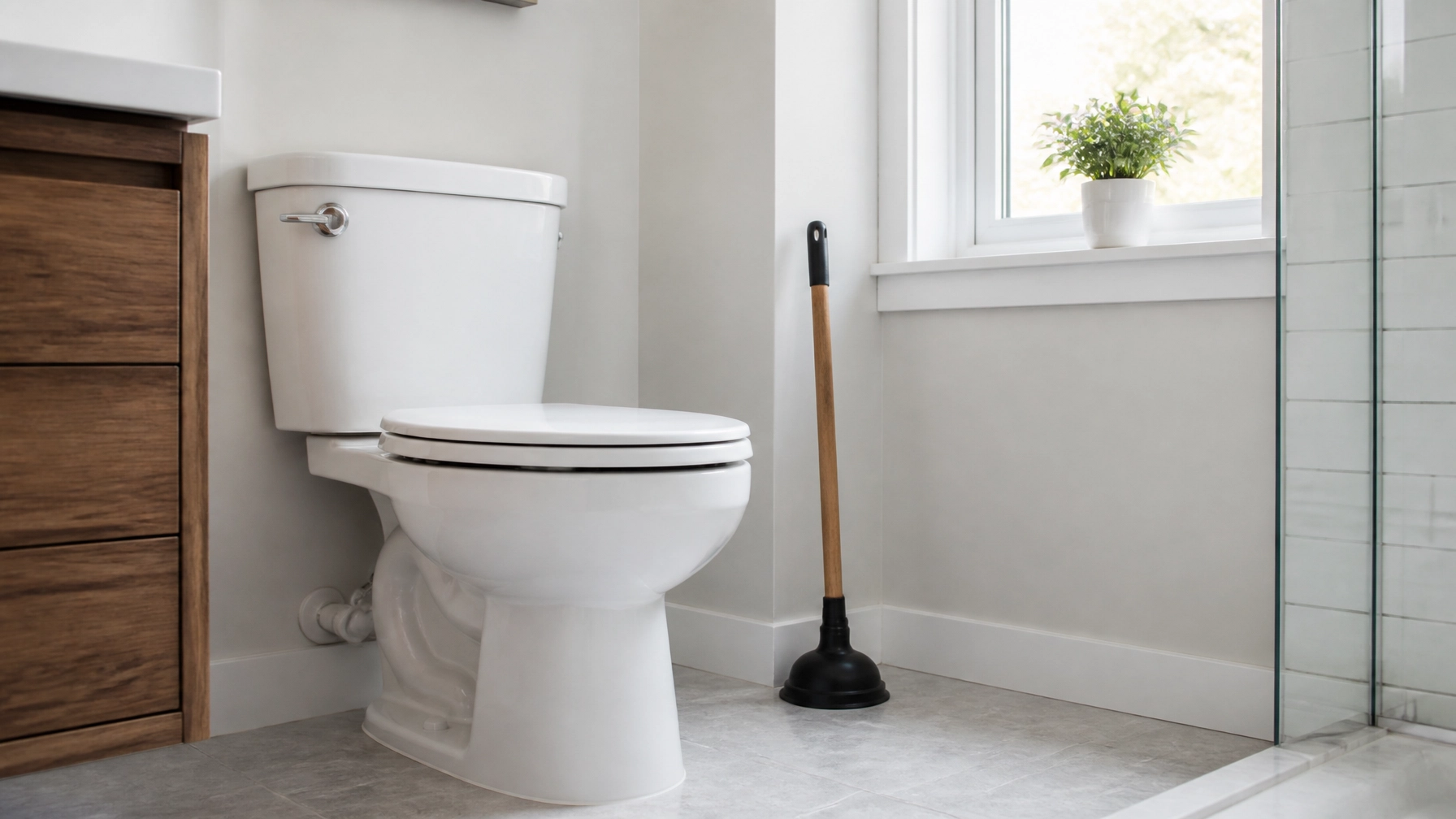
We’ve all been there. You flush the toilet, and instead of the water swirling away as it should, it starts to rise. Your heart sinks along with the water level: or worse, the water doesn't sink at all. It’s the ultimate household nightmare, especially when you have guests over or it’s the only bathroom in the house.
While your first instinct might be to reach for the plunger and start pumping like your life depends on it, there’s actually a bit of a science to clogged toilet repair. Sometimes the plunger is exactly what you need, but other times, you need to go "beyond the plunger" to get things moving again.
At Infinity Plumbing, we’ve seen everything from the classic "too much toilet paper" to the more adventurous "toddler’s toy car" stuck in the pipes. In this guide, we’re going to walk you through how to handle a clog like a pro, when you can DIY it, and when it’s time to call in our residential plumbing services.
Step 1: Don't Panic: Stop the Flow!
Before you even touch a tool, you need to make sure you don't end up with a flood on your bathroom floor. If the water is rising and looks like it’s going to overflow, you need to act fast.
- Locate the Shut-Off Valve: Behind almost every toilet, there is a small valve on the water line. Turn it clockwise (righty-tighty) until it stops. This cuts off the water supply to the tank, so the bowl can't keep filling.
- The Flapper Trick: If you can’t get to the valve quickly enough, pop the lid off the tank and reach inside. Push the rubber flapper (the thing at the bottom attached to a chain) down over the hole. This will stop the water from moving from the tank into the bowl.
Once the immediate threat of a flood is gone, you can take a deep breath and assess the situation.
The Art of the Plunge
Believe it or not, there is a "right" way to use a plunger. Most people just grab whatever they have in the closet and hope for the best, but the tool you use matters just as much as the technique.

Choose the Right Tool
There are two main types of plungers:
- Cup Plunger: These are the flat ones. They are actually designed for sinks and tubs, not toilets. They don't create a good seal on the curved bottom of a toilet bowl.
- Flange Plunger: This is the one you want. It has an extra sleeve or "flange" that pulls out from the bottom, allowing it to fit perfectly into the toilet drain hole for a much stronger seal.
The Technique
- Get a Seal: Lower the plunger into the bowl at an angle so the cup fills with water instead of air. Place the flange into the drain hole.
- Start Gentle: Your first push should be gentle. You want to push the air out of the plunger without splashing water all over yourself.
- Vigorous Pumping: Once you have a good seal, pump up and down vigorously for about 15 to 20 seconds. Remember, the goal is to create suction and pressure to dislodge the clog.
- Pull Up Sharply: Often, it’s the pulling motion that actually breaks the clog. Give it a good tug at the end.
If the water drains, you’ve won! If not, don't worry: we have more tricks up our sleeve.
DIY Methods Without a Plunger
If the plunger didn’t work or you don't have one on hand, there are a few "home remedy" styles of clogged toilet repair you can try.
1. The Dish Soap and Hot Water Trick
This is surprisingly effective for organic clogs (the ones involving too much waste or paper).
- Squirt about half a cup of dish soap into the toilet bowl. The soap acts as a lubricant for the pipes.
- Let it sit for 10 minutes.
- Pour a gallon of very hot (but NOT boiling) water into the bowl from about waist height. The pressure of the water combined with the soap can often "lube" the clog right through the trap. Note: Boiling water can crack the porcelain of your toilet, so stick to hot tap water!
2. Baking Soda and Vinegar
The old volcano experiment from middle school can actually help your plumbing.
- Pour one cup of baking soda into the bowl.
- Slowly add two cups of white vinegar.
- Let it fizz and sit for at least 30 minutes. The chemical reaction can break down some of the materials causing the blockage.
Taking it Further: The Toilet Auger
If you’ve tried the soap and the plunger and you’re still staring at a full bowl, it’s time to bring out the "closet auger." This is a specialized drain snake specifically designed not to scratch your toilet's porcelain.

Using an auger requires a bit more care. You feed the cable into the drain and turn the handle clockwise. When you feel resistance, you’ve hit the clog. You can either break it up by cranking through it or try to hook it and pull it back out. If you aren't comfortable doing this, this is the perfect time to call an emergency plumber near me.
Prevention: What NOT to Flush
The best way to fix a clogged toilet is to never have one in the first place. Your toilet is not a trash can, even though some packaging might lead you to believe otherwise.

To keep your pipes clear, avoid flushing these common culprits:
- "Flushable" Wipes: These are the number one cause of clogs we see. They don't break down like toilet paper and often get caught on small imperfections in your pipes.
- Paper Towels and Tissues: These are designed to stay together when wet, which makes them terrible for your plumbing.
- Dental Floss: It’s essentially a tiny, indestructible rope that can wrap around other debris and create a massive "hairball" in your pipes.
- Grease and Oil: It might be liquid when you pour it, but it solidifies in the cool pipes and acts like glue for everything else.
- Feminine Hygiene Products: These are designed to absorb liquid and expand: the exact opposite of what you want inside a pipe.
When to Call the Pros at Infinity Plumbing
Sometimes, a clog isn't just a clog. If you notice any of the following, it’s time to stop the DIY efforts and call for residential plumbing services:
- Multiple Clogs: If your toilet is clogged and your shower or sink is also backing up, you likely have a main sewer line issue.
- Frequent Clogs: If you have to plunge the same toilet every week, there’s something deeper going on: possibly a tree root intrusion or a pipe that has shifted.
- The "Gurgle": If your toilet gurgles when you run the sink or the washing machine, it’s a sign of a venting issue or a partial blockage deep in the system.
- The Mystery Object: If you know for a fact that a cell phone, a toy, or a large solid object went down, stop plunging. Plunging can actually push the object deeper and make it harder (and more expensive) to retrieve.
At Infinity Plumbing, we use professional-grade equipment and cameras to find exactly what’s causing the problem without damaging your home. Whether it's a simple fix or you need an emergency plumber near me on a Sunday afternoon, we’re here to help.
Contact Us Today
Don't let a stubborn clog ruin your day. If you’ve gone beyond the plunger and still need help, reach out to the experts at Infinity Plumbing.
- Phone: 239-499-8998
- Email: service@infinityhome.services
- Website: infinityhome.services
We provide reliable, high-quality plumbing expertise for Southwest Florida and Cape Coral residents. Give us a call, and let’s get your home back to normal!
Leave a Reply