

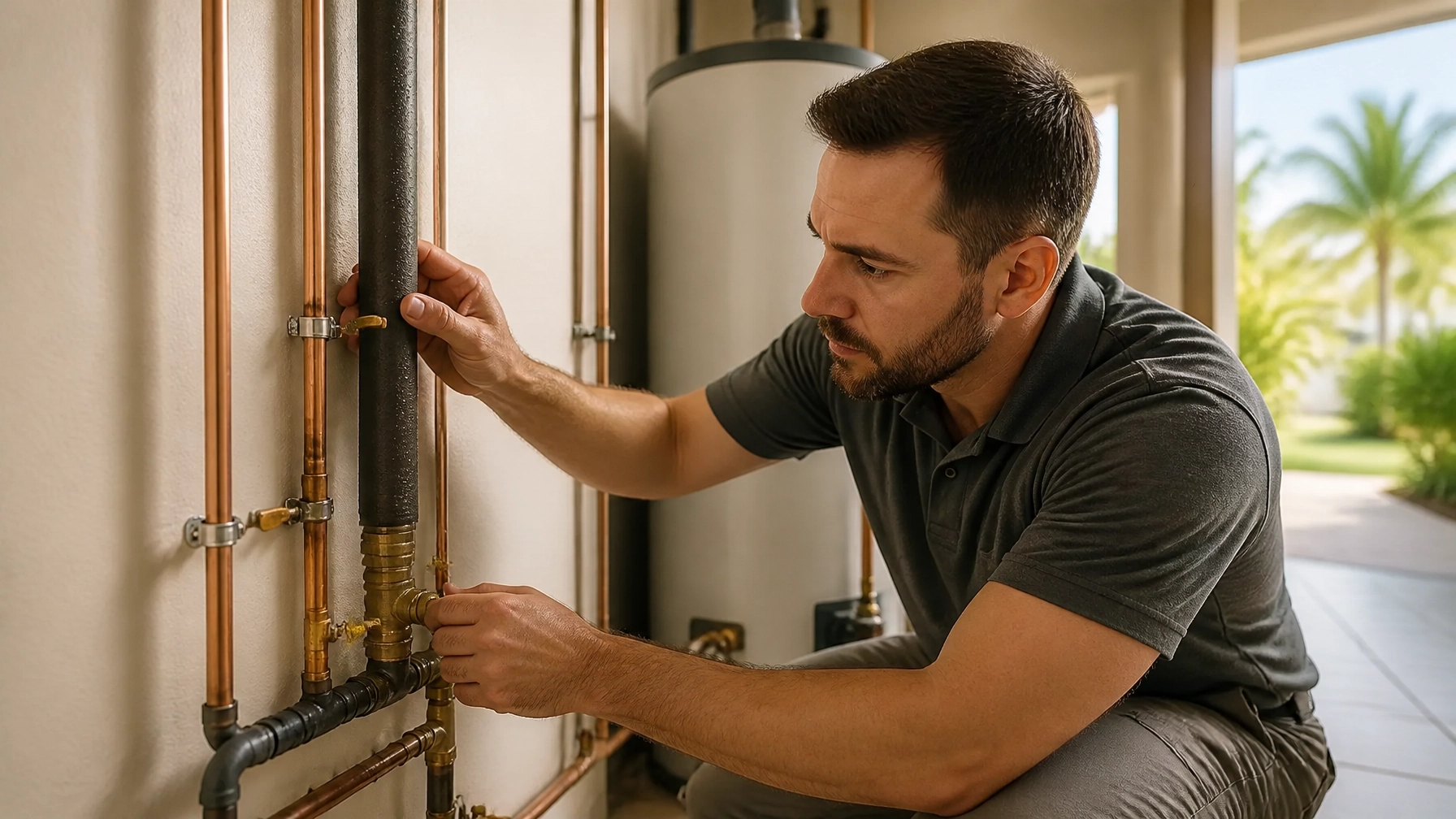
Cape Coral homeowners deal with heat, heavy rain, and high humidity for much of the year. While your air conditioner works hard to keep the house comfortable, your plumbing system is also dealing with extra moisture and seasonal stress.
Humidity does not cause every plumbing problem by itself. However, it can make small issues worse. Condensation can keep cabinets and walls damp. Moisture can speed up corrosion. Summer storms can put extra pressure on drains and sewer lines.
Here are five Florida humidity plumbing problems to watch for, plus simple ways to protect your home.
1. Sweating Pipes and Moisture Under Cabinets
Cold-water pipes can “sweat” when warm, humid air touches their cool surfaces. This is similar to condensation forming on the outside of a cold drink.
A little condensation may not seem serious. But if it happens every day, water can collect under sinks, inside walls, or around pipe penetrations. Over time, that moisture may damage cabinets, drywall, flooring, or other building materials. It can also create the damp conditions that allow mold and mildew to grow.
You may notice:
- Dampness under a kitchen or bathroom sink
- Water droplets on exposed pipes
- A musty smell inside a cabinet
- Swollen wood or peeling paint near plumbing
- Dark spots around pipe openings
Check under your sinks regularly, especially after long periods of hot weather. Keep cabinet doors open occasionally to improve airflow, and do not store items tightly against plumbing connections.
Pipe insulation can also help reduce condensation on cold-water lines. If insulation does not solve the problem, the moisture could be caused by a slow leak rather than humidity. In that case, scheduling leak detection near me can help locate the source before the damage spreads.

2. Hidden Leaks and Pipe Corrosion
High humidity keeps plumbing areas damp, and damp conditions can speed up rust and corrosion on metal fittings, valves, and connections. Florida’s mineral-rich water can add another layer of stress to pipes and fixtures.
A small leak may begin at a supply line, shutoff valve, drain connection, or pipe joint. Because the leak may be hidden behind a wall or under a cabinet, you might not see standing water right away.
Watch for these warning signs:
- An unexplained increase in your water bill
- Water stains on ceilings or walls
- Soft spots in flooring
- Peeling paint or bubbling drywall
- Rust around valves or pipe connections
- A musty smell that keeps coming back
- A water meter that moves when all fixtures are off
Do not ignore a small drip. A slow leak can damage surrounding materials and may become much more expensive if it continues for weeks or months.
If you can safely reach the affected valve, turn off the local water supply. For a larger leak, use your home’s main shutoff valve and call a professional. Infinity Plumbing’s residential plumbing services can help with inspections, repairs, and moisture-related plumbing concerns.
3. Water Heater Corrosion and Sediment Buildup
Your water heater is often located in a garage, utility closet, laundry room, or other area that may become warm and humid. That environment can contribute to corrosion around the tank, fittings, drain valve, and connections.
Sediment buildup is another concern. Minerals in the water can settle inside a tank-style water heater. As the layer grows, the unit may work harder to heat water. You might hear popping or rumbling noises, notice inconsistent temperatures, or run out of hot water faster than usual.
Look around your water heater for:
- Rust near the tank or fittings
- Water pooling at the base
- Dampness around the pressure-relief valve
- Rust-colored hot water
- Strange popping or rumbling sounds
- Water that turns cold during normal use
A leaking connection may be repairable, but water leaking from the tank itself usually means the tank has failed. An older system with repeated problems may also be a poor candidate for another repair.
If you are unsure whether you need water heater repair or a hot water heater replacement, a professional inspection can help you compare the age, condition, repair cost, and expected remaining life of the unit.

4. Slow Drains, Clogged Toilets, and Sewer Odors
Humidity does not directly create every clog, but Cape Coral’s hot weather, summer visitors, storms, and increased household activity can all add stress to your drainage system.
More showers, laundry loads, cooking, and guests can send extra hair, grease, soap residue, food waste, and paper products into your drains. During heavy rain, an existing blockage or damaged sewer line may also be more likely to cause backups.
Common warning signs include:
- A sink or tub draining slowly
- Gurgling sounds from a toilet or drain
- Water rising in the shower when another fixture runs
- Recurring toilet clogs
- Unpleasant sewer odors
- More than one backed-up drain at the same time
Use drain strainers in showers and sinks. Keep grease, cooking oil, coffee grounds, fibrous food scraps, and paper towels out of your drains. Only flush toilet paper and normal human waste. Products labeled “flushable” can still contribute to clogs, especially in older or damaged lines.
A plunger may handle a minor, isolated toilet clog. If the problem keeps returning, you may need clogged toilet repair rather than another quick plunge.
For slow or recurring backups, professional drain cleaning services can remove buildup deeper in the line. Multiple fixtures backing up at once may point to a main drain or sewer problem and should be addressed promptly.
5. Air Conditioner Condensate Drain Problems
Your air conditioner removes moisture from the air, which is especially important during Florida’s humid season. As the system runs, it produces condensation that normally drains away through a condensate line.
If that line becomes clogged with algae, dirt, or debris, water can back up near the air handler. Depending on the location, the overflow may damage ceilings, walls, flooring, or nearby plumbing areas.
Look for:
- Water around the indoor air handler
- A full or overflowing drain pan
- Damp drywall near the HVAC closet
- Musty smells
- An air conditioner that shuts off unexpectedly
- Water stains on a ceiling below the unit
Some condensate maintenance is handled by an HVAC professional, but the resulting water damage can involve plumbing and home drainage concerns. Keep the area around the air handler clear and have the condensate system checked as part of your seasonal home maintenance routine.
If you notice water near electrical equipment, do not reach into the area. Turn off the system if it is safe to do so and contact the appropriate professional.
A Simple Cape Coral Plumbing Maintenance Checklist
A few minutes each month can help you catch problems early:
- Check under sinks for dampness, stains, or corrosion.
- Look around the water heater for rust or water.
- Test toilets for rocking or leaking around the base.
- Clean shower and sink drain strainers.
- Watch for slow drains and recurring clogs.
- Check exposed pipes for heavy condensation.
- Keep indoor humidity under control with air conditioning or a dehumidifier.
- Use bathroom exhaust fans during and after showers.
- Know where your main water shutoff valve is located.
- Inspect outdoor hose bibs and visible plumbing connections.
- Schedule an inspection before extended travel or storm season.
When to Call a Plumber
Some plumbing problems can wait for a scheduled appointment. Others need immediate attention.
Call a 24 hour plumber if you have a burst pipe, rapidly spreading water, sewage coming into the home, no way to shut off the water, or water near electrical systems. If you are searching for an emergency plumber near me, act quickly to limit damage.
For hidden leaks, damaged supply lines, corroded piping, or recurring problems, experienced pipe repair specialists can identify the cause and recommend the right repair.
Keep Humidity From Becoming a Plumbing Headache
Florida humidity is part of life in Cape Coral, but it does not have to lead to major plumbing damage. Regular checks, good ventilation, prompt leak repairs, and professional maintenance can help protect your home throughout the year.
If you need help with a leak, clogged drain, water heater, or another plumbing concern, contact Infinity Plumbing.
Infinity Plumbing
Phone: 239-499-8998
Email: service@infinityhome.services
Website: infinityhome.services
Whether you need routine maintenance or urgent help, our team is ready to provide reliable plumbing service for your home.
Leave a Reply